
Topics for today:
- Vanguard Does an About Face on BTC
- BofA Advises 4% BTC Allocation to Clients
- Poland Vetos Bad Bitcoin Bill
- AI Wreaks Havoc on DeFi Contracts
Circle P:
Permanerd
Freeze Dried Fruits and Herbs
Comfrey Salve
2.1% off with BitcoinAnd
https://sats4snacks.com/
https://primal.net/p/nprofile1qqspqxs39j9dctnfuqqrz98lrswnddlumcrdsn28j689n824susmphcfxudsz
Today's Articles:
https://bitcoinmagazine.com/news/vanguard-opens-platform-to-bitcoin-etfs
https://www.coindesk.com/business/2025/12/02/bank-of-america-greenlights-wealth-advisors-to-recommend-up-to-4-bitcoin-allocation
https://cointelegraph.com/news/poland-president-veto-crypto-bill-political-clash
https://cointelegraph.com/news/bitcoin-drop-to-dollar84k-not-due-to-japan-bond-market-crash
https://bitcoinmagazine.com/news/musk-calls-bitcoin-a-fundamental-currency
https://decrypt.co/350575/ai-models-human-level-capability-smart-contract-exploits
https://atlas21.com/china-reiterates-its-ban-on-bitcoin-and-digital-assets-tighter-controls-on-stablecoins/
https://bitcoinnews.com/p/xapo-bank-bitcoin-credit-fund
Get You're Free Comfrey Owner's Manual Here:
https://www.bitcoinandshow.com/the-comfrey-owners-manual-is-here/
Find the Bitcoin And Podcast on every podcast app here:
https://episodes.fm/1438789088
Find me on nostr
npub1vwymuey3u7mf860ndrkw3r7dz30s0srg6tqmhtjzg7umtm6rn5eq2qzugd (npub)
6389be6491e7b693e9f368ece88fcd145f07c068d2c1bbae4247b9b5ef439d32 (Hex)
Twitter:
https://twitter.com/DavidB84567
StackerNews:
stacker.news/NunyaBidness
Podcasting 2.0:
fountain.fm/show/eK5XaSb3UaLRavU3lYrI
Apple Podcasts:
tinyurl.com/unm35bjh
Mastodon:
https://noauthority.social/@NunyaBidness
Support Bitcoin And . . . on Patreon:
patreon.com/BitcoinAndPodcast
Find Lightning Network Channel partners here:
https://t.me/+bj-7w_ePsANlOGEx (Nodestrich)
https://t.me/plebnet (Plebnet)
Music by:
Flutey Funk Kevin MacLeod (incompetech.com)
Licensed under Creative Commons: By Attribution 3.0 License
creativecommons.org/licenses/by/3.0/
It is 09:17AM Pacific Standard Time. It is the December 2025. This is a palindrome episode, twelve twenty one of Bitcoin. And what what do I got for you today? Well, it seems that Vanguard is gonna start selling ETFs for Bitcoin. And, of course, they're going to get into shitcoinery too because, you know, that's apparently just the way it works. But Vanguard, if you don't remember, swore up and down. The last CEO swore up and down that Vanguard would never ever ever ever ever offer any type of product like that. Of course, that CEO is gone. The new CEO says yes, and, well, it looks like it's going to happen. And then, well, Bank of America, what are they doing?
Seem to be warming up to Bitcoin as well. Then we're gonna run over to Poland. Poland's president has well, he doesn't really like this crypto bill that he saw, so, he struck it down. I'll let you wait until we get into that particular story to figure out which way that hammer dropped. And then remember yesterday, I was talking about the, yen carry trade basically collapsing. There's probably more to that story. And in fact, Cointelegraph has a, has an article here that we're gonna get into talking a little bit more about the macro environment around the yen carry trade and all of this together kind of doing you know, basically putting its its ape like weight onto Bitcoin. And then Musk has a tendency to open his big mouth at particular times.
Sometimes he says stuff that's good, and sometimes he says stuff that's bad. I'll let you be the judge on this one. And then Frontier AI models. I'm not sure DeFi is gonna last. Not not the way it's built right now anyway. I think we're in for a lot more hacks and I think the rapidity of those hacks are well, I think they're gonna accelerate and we'll tell you why. China is gonna ban Bitcoin again and again and again and again and again and again because that's what China does. It says one thing. Of course, it always does another one. And then Zappo Bank, we're gonna talk a little bit about it here at the very end. But first, let's let's get into this, Vanguard business here from Bitcoin Magazine. Micah Zimmerman is writing, world's second largest asset manager, Vanguard.
Alright. So BlackRock is the world's first. Vanguard is the second asset manager in size. Well, Vanguard opens its platform to Bitcoin and crypto ETFs according to Bloomberg. Alright. Well, I guess we'll take it for for rote if it came out of Bloomberg. Vanguard Group will allow Bitcoin and crypto linked exchange traded funds and mutual funds to trade on its platform, reversing a policy that for years, years barred retail clients from accessing digital asset products through that firm. Starting today, Tuesday, Vanguard brokerage customers will be able to trade ETFs and mutual funds that primarily hold select cryptocurrencies, including Bitcoin and other cryptocurrencies, according to Bloomberg.
The move marks a shift for the world's second largest asset manager, which has long argued that digital assets were just too volatile and extremely speculative for long term portfolios. The decision follows growing demand for from both retail and institutional investors and comes after the approval of spot Bitcoin ETFs in January 2024 ushered billions and billions of dollars into regulated crypto products. BlackRock's iShares Bitcoin Trust, the largest of those funds, peaked near 100,000,000,000 in assets earlier this fall and still manages about 70,000,000,000 despite the recent price declines and outflows.
The Bitcoin ETF lets investors gain exposure to Bitcoin without actually buying or storing the cryptocurrencies themselves. Yes. We understand that. Instead, the fund holds Bitcoin while investors simply buy shares on a stock exchange with the share price moving alongside Bitcoin's market value. It's a convenient and easy way to get invested into Bitcoin. It's not that hard to just buy the asset. It really isn't. For institutions and retirement funds and stuff like that, they have to go this route. But for you, dear friends, as retail, just buy Bitcoin.
Don't let somebody hold your Bitcoin for you. Just buy the asset. Don't look for instruments that that chase price discovery and price action. Just buy the asset. You'll you'll chase it all by your lonesome, I promise you. But Vanguard's change opens access to crypto funds for more than 50,000,000 brokerage customers. Let me say that again. This change at the top of Vanguard has opened the access to more than 50,000,000 brokerage customers who collectively oversee more than $11,000,000,000,000 in assets as of September 1.
Quote, cryptocurrency ETFs and mutual funds have been tested through periods of market volatility performing as designed while maintaining liquidity, Andrew Kaczynski, Vanguard's head of brokerage and investments, told Bloomberg. He added that back office processes for servicing crypto funds have matured as investor preferences evolve. The policy shift comes more than one year after Saleem Ramji, formerly a top executive of BlackRock and longtime blockchain advocate, took over as Vanguard chief executive officer. While Vanguard will support most crypto funds that meet regulatory requirements, the firm said that it will not launch its own crypto products and will continue to exclude funds linked to meme coins. Well, at least at least they got that part right. Well, quote, while Vanguard has no plans to launch its own crypto products, we serve millions of investors with diverse needs, Kaczynski says.
Crypto linked ETFs remain the fastest growing segments in US fund industry history even after a sharp market pullback, underscoring rising investor appetite for regulated exposure to digital assets. BlackRock recently increased internal exposure to its own iBit Spot Bitcoin ETF with the strategic income opportunities portfolio now holding 2,390,000.00 shares of iBit worth a $155,800,000. That's actually up 14% since June. Bitcoin jumped on the news, trading above 86,500 at the time of writing. Actually, it's more like 90,000 right now. We'll we'll see if that shit holds because god only knows who opens their mouth next and says whatever.
Everybody's on pins and needles, man. That actually tells me more about the global realization of the citizenry of the globe as to just how bad the economies around the world actually are. I don't think anybody's gonna be able to sugarcoat this. Right? I think it's so bad that even retail lining up to buy gold in Australia what was that? Three weeks ago, two weeks ago? I think that tells you more about what's going on with the world economy than CNBC, Fox Business, whatever could ever tell you. The pulse is always with the people. I've never seen this before.
I've seen some weird shit. I first you know, when when the savings and loan crisis happened in the late was it the late eighties, like, '89 or something like that, it was a huge deal, and it is dwarfed. It was dwarfed by the money printing that occurred after nine eleven and then again after well, during the 2008, two thousand nine financial crisis. But back then, it was a big deal, man. You couldn't you could not look at the news without people talking about it. And yet, life on Main Street basically went about as normal. And the same thing actually happened well, I was gonna say 2001, the whole September 11 thing. Clearly, things weren't normal, but that was that that's like Homeland Security, Patriot Act. But, monetarily, life kinda went on as normal. And then 2008, 2009, life kinda went on as normal. People were bitching, but they weren't lining up to buy gold.
They weren't, you know, like, of course, Bitcoin really had just been birthed, you know, 01/03/2009. So we, you know, only the the the Cypherpunks really kinda knew about it back then. But today today is different. Hell, even the pandemic, people tried to get get didn't really freak out about stuff. I they got they got locked in. They couldn't go to restaurants. They finally emerge we finally emerge from our caves around the world and went out and did stuff. But, again, we really didn't see very many changes. And then the realization that inflation that occurred during that time was never gonna go away or wasn't gonna go away anytime soon. And now we're looking at it as, like, it's never going away. And now people are lining up in the street to do things like buy assets that they essentially never normally bought in mass before.
That tells me everything that I need to know about what the people think about what the hell is going on on the street. And now we got Vanguard doing a complete one eighty after they got rid of their c CEO and got a new one. It's amazing. 50,000,000 customers just got access. We'll have to see what happens, but 50,000,000 is nothing to sneeze at. Alright. On to Bank of America. What's going on with these cats? Do do do. Bank of America green lights wealth investors to recommend up to 4% Bitcoin allocation. Oliver Acuna is gonna tell us about, well, Bank of America running into the fray as it were. Bank of America, one of The US's largest financial institutions, has become the latest Wall Street giant to warm up to Bitcoin.
Beginning in January, the bank's wealth management advisers will be allowed, allowed, to recommend a one to 4% allocation to crypto assets according to Yahoo Finance. Initially, Bank of America and Merrill Lynch thundering herd will focus on four spot Bitcoin ETFs. BlackRock's iBit, Fidelity's FBTC, Bitwise's BITB, and Grayscale's BTC. It's a major change for the bank, which previously allowed its clientele to invest as they wish, but did not allow its advisers to recommend any crypto exposure. They they weren't allowed to even speak of it. The news comes just hours, hours, hours after asset management tightened Vanguard reversed its long standing policy and will now allow its clients to access crypto ETFs.
Pausing to say this, if you think Bank of America is the last domino to fall here, you would be wrong. This is gonna collapse all the way down to Main Street corner store banks. Right? I whole chains of regional banks are going to just they're just gonna fall over and say, fine. Let's do this thing. Alright. So Vanguard reverses its position. Hours later, Bank of America says, okay. One to 4% allocation into Bitcoin. We'll allow it. This does not stop here by any stretch of the imagination. The move also brings Bank of America in line with wealth management platforms of other major institutions like BlackRock and, of course, Morgan Stanley, the action also likely ups the pressure on the dwindling number of holdouts.
Wells Fargo, Goldman Sachs, and UBS amongst them, quote, for investors with a strong interest in thematic innovation and comfort with elevated volatility, a modest allocation of 1% to 4% in digital assets could be appropriate, Chris Heisey, chief investment officer at Bank of America Private Bank, said in a statement, quote, the lower end of this range may be more appropriate for those with a conservative risk profile. Holy shit. While the higher end may suit investors with greater tolerance for overall portfolio risk. So there you go. Bank of America was the next domino right after Vanguard.
It doesn't stop with these guys. I promise you. Now on to Poland. No Polish jokes here. I promise you. Helen Parks, CoinTelegraph, Poland's president vetoes strict crypto bill says it threatens freedom of polls. And we're not talking about poll dancers. Poland's president, Karol declined declined to sign a bill imposing strict regulations on crypto asset markets, drawing praise from the crypto community and sharp criticism from others in the government. Gnaracki, I guess that's how you pronounce it, vetoed Poland's crypto assets market act, saying that it its provisions, quote, genuinely threaten the freedom of Poles, their property, and the stability of the state according to a statement by the president's press on Monday accord or introduced in June.
This bill had drawn criticism from industry advocates such as Polish politician, Tomas Minson, who had anticipated the president's refusal to sign it as it clear as it cleared parliamentary approval. Although crypto advocates welcomed the veto as a win for the market, several government officials condemned the move. Oh, pausing to say, this is when you start seeing who's working for their own government and who's working actually for foreign interests, like the IMF, like World Bank, like NATO, like the United Nations. These people, I guarantee you, these people that are voicing their objections right here, they are not actually caring as much about Poland and the Polish people as they are being instructed by voices in their ear from other places.
I'll bet you, I will bet you my hat, because I don't have much left, that that's the case. Just I just wanna put that out there. Alright. So officials condemned the move, claiming the president had chosen chaos and must bear full responsibility for the outcome. Oh my god. These people. One of the main reasons cited for the veto was a provision allowing authorities to easily block websites operating in the crypto market. Domain blocking, and this is a quote, domain blocking laws are opaque and can lead to abuse, the president's office said in an official news release. The president's office also cited the bill's widely criticized length, saying its complexity reduces transparency and would lead to overregulation, especially when compared to simpler frameworks in The Czech Republic, Slovakia, and Hungary.
Yeah. See, they don't like there are places where they don't appreciate, you know, 700 page bills. We should actually adopt that here in The United States. If your bill is over 20 pages, it it doesn't even make the cut. Yes. I'm sure they'll all listen to me in Washington. Quote, overregulation is an easy way to drive companies to the Czech Republic, Lithuania, or Malta rather than create conditions for them to operate and pay taxes in Poland. Naraki also highlighted the excessive amount of supervisory fees which may prevent start up activity and favor foreign corporations and banks, quote, this is a reversal of logic, killing off a competitive market and a serious threat to innovation, end quote.
Naraki's veto has triggered a strong backlash from top Polish officials, including finance minister on and deputy prime minister and minister of foreign affairs, Sikorsky. Oh, it's like the, helicopter. Domanski warned on x that already now 20% of clients are losing their money as a result of abuses in this market, accusing the president of having chosen chaos. Oh my god. The hawk to humanity. He chose chaos and saying he bears full responsibility for the fallout, which is yet to be seen. Sikorsky echoed that concern saying that the bill was supposed to regulate the crypto market, quote, when the bubble bursts and thousands of polls lose their savings, at least they will know who to thank, Sikorsky argued on x.
Crypto advocates, including Polish economist Krzyszkaow Piech, quickly pushed back, arguing that the president cannot be held responsible for authorities failing to pursue scammers. See, just do the police work, y'all. The people have been scamming forever. Police have been around forever. Detectives exist. Do the freaking work. It's just like you're just gonna regulate everybody into a box at one point or another. Nobody can even go outside anymore. Then we'll that that'll take care of crime, and then they'll go after thought crime. And then they'll start regulate having to regulate what goes on inside your head, then they'll put a box around your mind. I'm pretty sure this is not the way humanity was supposed to exist upon this planet, but I digress.
He also noted that the European Union's marketing crypto assets regulation is set to provide investor protections across all European Union member states starting 07/01/2026. So he's leaning on the MICA legislation to do the work, I guess. It's good that the Polish president said, fuck off. Because at least there's some sensibility there saying, look, it's like the the bill's too long. There's too much language. That means it's not transparent, and that is a breeding ground for overregulation because people at any given stage of this you know, if it becomes law of this law's lifespan, however long it goes, over decades and different people interpreting different ways, it's going to that's the chaos.
I don't know what these other morons are talking about. That's the chaos. And it makes me hungry, which is why I go to sats4snacks.com. That's right. It's sats4snacks.com. Go chill out with my good friend, Perma Nerd, and buy big old chunks of freeze dried pineapple. You can buy those in five packs. 44,000 sets for freeze dried pineapple. Sweet. It's light. Naturally tangy. Bit chunks are 100% freeze dried pineapple pieces made for the plebs who appreciate real fruit. Each bite keeps the pure tropical flavor of fresh pineapple with no added sugar nor preservatives.
It's just pineapple, nothing else. A pleb favorite for stacking snacks. Tastes like a good day on the beach. You can also get just peachy, which is freeze dried peaches and freeze dried mangoes and freeze dried bananas. And one of my favorite things that is not food based, don't eat this, is proof of healing comfrey salve. You got little nicks, cuts, bruises, sprains. You got bee stings, wasp stings, whatever. As long as it's not a full scale of vulsion on your skin, which is a very deep wound, by the way, something that you need to go to the hospital to stitch up. If it's not that, use Comfrey salve on it. The healing let the healing begin, brothers and sisters, with proof of healing Comfrey salve. I love comfrey. If you've listened to this show for any length of time, even before I met Perma Nerd, I was running my mouth about the wonder plant that is comfrey.
I love comfrey. In fact, in every single episode that I've been doing lately, you can go into the show notes and beneath all the articles, the first thing after the last article is going to be a link to my comfrey guide if you want to figure out how to grow it yourself, how to propagate it yourself, how to use it yourself. But before you do that, make sure you go over to sats, the number four, snacks. That's satsforsnacks.com. Satsforsnacks.com. Get yourself some freeze dried bananas, freeze dried mangoes, freeze dried peaches, and, of course, the pineapple. And he's got some other stuff too. Just go to sats4snacks.com. Make damn sure that you use coupon code Bitcoin and because you'll get a 2.1% off on everything that you buy, and it lets Perma Nerd know that I made the sale for him. And that way, Perma Nerd can decide on his own time how many sats that sale was worth, and then he will give those to me on the other side. It's the circle p where I bring plebs with goods and services just like you to plebs just like you who want to buy said goods and services, but you're gonna buy them in Bitcoin because if you're not selling your goods and services in Bitcoin, you're not in the circle P Okay, so Bitcoin fell to 84,000 yes, we were all sad, we were crying We were all crying, and it was all a mess. But is Japan's bond market the culprit, or is there more at play?
Marcel Petchman from Cointelegraph, please, for the love of God, tell me more. Bitcoin price dropped sharply on Sunday after failing to overcome $92,000. The slide to 84 k on Monday wiped out $388,000,000 in bullish leveraged positions, leaving analysts searching for a clear explanation. Oh my god. What happened? A mix of factors contributed to the sell off and pushed traders towards a more cautious stance. Some analysts quickly tied Bitcoin's drop to turbulence in the Japanese bond market where yields on twenty year notes climbed to their highest level in twenty five years. Higher yields generally signal that investors are less willing to buy those bonds at current prices whether due to concerns about inflation or rising government debt.
Although the move occurred on the same day, drawing a direct link was challenging, especially since the thirty day correlation has fluctuated between positive and negative throughout the whole year. Japan's market stress may also reflect deteriorating global economic expectations. Trader Jim Chanos, famous for predicting the fall of Enron during the .com bubble in 1999, highlighted in a recent interview with Yahoo Finance the growing risks tied to GPU backed debt. Wow. Really? GPU backed debt issue oh, issued by cloud AI companies. Okay. According to Channels, quote, a lot of the AI companies are just loss making enterprises right now.
And if this does not change, there are going to be debt defaults. The financing trend that uses GPUs as collateral was pioneered by CoreWeave according to Yahoo Finance and has been accompanied by NVIDIA's large investments in the cloud sector. I need to pause here. Coreweave did not actually pioneer this because just because you're borrowing against GPUs does not make it a novel idea. What am I referring to? Bitcoin mining. Dude, Bitcoin miners have been doing this shit for years. They were borrowing against their ASICs. Right? And did did some of them get wiped the hell out? Oh, yes, they did.
On several different occasions, they did. And they learned their lessons. So CoreWeave apparently didn't actually learn very much of their lessons, and they'll probably get wiped out too. Who knows? Who knows where this shit goes? But channels makes a lot of sense here. If they don't get their income rails set up and actually making a positive profit, a positive inflow, then there are going to be debt defaults, and that's not gonna be pretty. And it's not gonna be pretty for the equities market in the general scheme of things. In fact, if if that shit were to happen, people might actually fly to Bitcoin.
They're gonna go to gold, Bitcoin, silver, which is, I think, at $60 an ounce today, which is mesmerizing considering it was $14 not too long ago. But I digress. Let's get on to this. In these structures, AI cloud firms borrow against their racks of NVIDIA chips, effectively treating the GPUs as collateral, meaning that if cash flows stay weak and hardware prices fall, the entire debt stack becomes more vulnerable to default. Yes. We know. Another source of unease came from the regulatory environment. Remember, we're still talking about this drop in Bitcoin price. Even if not directly tied to Bitcoin, when traders sense that governments are tightening their stance on cryptocurrencies, many investors become less willing to increase their exposure.
So even without direct consequences for Bitcoin itself, overall sentiment can turn negative. Reuters reported on Saturday that China's central bank reaffirmed its strict approach approach toward digital assets pledging to intensify its crackdown on illegal activity. We'll get to that part here in a second. I've got a whole other story in the second half about that, so we'll just leave that alone. The 23% Bitcoin price decline over the past thirty days has disrupted how strategic digital asset reserve companies operate. Until recently, they had strong incentives to issue stock at market price and use the proceeds to buy Bitcoin. But that approach breaks down once a company trades below its net asset value.
And they don't say it here, but remember, that's the whole MNAV number. Alright? So if their m nav trades below one, you got problems. If it trades at one, many traders say that that actually makes sense. That is nice and healthy. If it trades above one, there's a lot of people that don't like that shit, except for the company itself because they can sell a whole bunch of stock and buy a whole bunch more of the actual net asset that is giving them that m nav above one. And then shit happens, and then it falls below one, and all of a sudden you find yourself over leveraged and blah blah blah blah blah. It's the same gambling story the world round. It's putting your Rolex on the pile of money at the poker table because you're out of cash, And your grandma gave you that Rolex. So, you know, if you lose it, you're kinda disrespecting your your grandmother, which is one of the reasons why you should not gamble. Strategy, their CEO, Fong Li, said in this famous interview that the company would only consider selling its Bitcoin if MNAV remained depressed and every other funding option had been exhausted.
Although fear spread over the weekend, strategy announced on Monday that it successfully raised 1,440,000,000.00 in cash to support dividend payments and service its debt obligations. Pausing to say, do you think Sailor might have given Fong Li a phone call after that interview? You you think it's possible that he might have sent him a text message, possibly an email, or even just invited him over to his yacht to, you know, chill out and have a drink while, I don't know, strippers were pole dancing inside. Whatever. But I get the feeling that strategy, you know, chairman Sailor called up Fong Li and said, why did you do that?
Why did you say that shit? Now now look at the crap I gotta go do. I gotta go raise 1 and a half billion dollars so these assholes can get clean diapers because of the shit you said made them pee their pants. I'm telling you, man, leadership is not just about who's leading. Leadership, if multiple people have leadership positions, is more about their relationships with each other, their internal knowledge of each other, like fighting in a war with I you know, which I've never done, but I'm pretty sure that you you you you if you're like World War two in a foxhole and bombs are falling all around you and shit like that, you get to be pretty damn chummy with your foxhole mate as you're praying to God even though both of you were atheist. You you get what I'm saying? And it doesn't look like in this particular case that Fong Li and Saylor were on the same page. And immediately, they raised $1,440,000,000 to assuage the markets because Fong Li didn't shut his mouth.
Continuing in parallel, S and P Global Ratings, they, well, they downgraded Tether and their stablecoin reserves to the weakest levels possible. On Wednesday, USDT began trading at a point 4% discount relative to the official USD slash c n y rate in China, signaling some moderate selling pressure. Analysts cited persistent gaps in disclosure and limited information on the creditworthiness of its custodians, counterparties, or bank account providers. Whatever. Bullshit. They dude, all that's disclosed. Whatever. Whether or not the criticism is fully justified, given that Tether does not operate like a traditional bank, the move still hurts cryptocurrency traders' risk appetites.
So Bitcoin's crash to 84,000 on Monday reflects broader concerns, not just the yen carry trade, but broader concerns around the stablecoin sector and fading confidence in global economic prospects rather than any particular specific issue in Japan's government bond market. Okay. I I have no problem with that. Because like I said yesterday when I was talking about it, there's there's a mess everywhere. Everywhere is a mess, and the Northern Hemisphere is going into winter. Whatever. Let's run the numbers. CNBC futures and commodities, and the markets are basted in blood, baby. It's red everywhere.
Let's start with energy, which is all red, no greens. There's no hedging today from natural gas. Brent Norcie down two thirds of a point as is West Texas Intermediate, which is clocking in at $58.95 a barrel. Natural gas falling one and a quarter percent, but still chilling out at $4.86, which is essentially a little bit less than half of the price that it was at natural gas's highest price when we were coming out of the pandemic. I'm I I just wanna make that clear. This is a very high price for natural gas even if it did lose ground today. Gasoline, one and a half percent to the downside, a buck 84 a gallon. Murbaughn crude is also down two thirds of a point to $64.72.
Metal rocks not doing well today either except for palladium, which is up almost two points, but gold is down one and a quarter, still chilling at $42.23, though. Platinum down one and a half. Silver is down a full point, so it is below 60 at $58.56 an ounce. Copper is down almost a full point. Ag is mostly in the red today, but there's some there's some green flashes here. I got wheat up 1.36%. That's our biggest winner for the day. Biggest loser is chocolate 1.8% to the downside. Meanwhile, live cattle is trading up two full points. Ranchers are happy today.
Lean hogs down a quarter, and feeder cattle are up two and a third percent today. S and P is up a third. Nasdaq is up point 8%. The Dow is up a half point, but the S and P Mini is essentially in the red, but only slightly. It's generally moving sideways. $91,520 is the price of a Bitcoin that gives us a $1,830,000,000,000 market cap. You can get 21.8 ounces of your favorite shiny metal rock or your one Bitcoin of which there are 19,956,538.66 of. Average fees per block are high today. 0.04 BTC taken in fees on a per block basis. That's more than that's about double the the low side of, of of what it costs to send a transaction. So what's going on? Well, it looks pretty normal today.
25 blocks carrying 63,000 unconfirmed transactions, waiting to clear at high priority rates at six sats per v byte. Low priorities are half that. Mining, 1.08 ZetaHashes per second. We are still in ZetaHash territory. That's that's all I would ever need for security on this network. Alright. Oh, shoot. Hold on for a sec. I did not have a, screen setup. Okay. So here we are, from Carrie Mee Yin, yesterday's episode of Bitcoin and Jason High with 500 says, thanks for another good episode. I misheard yearn. And in in the intro is urine.
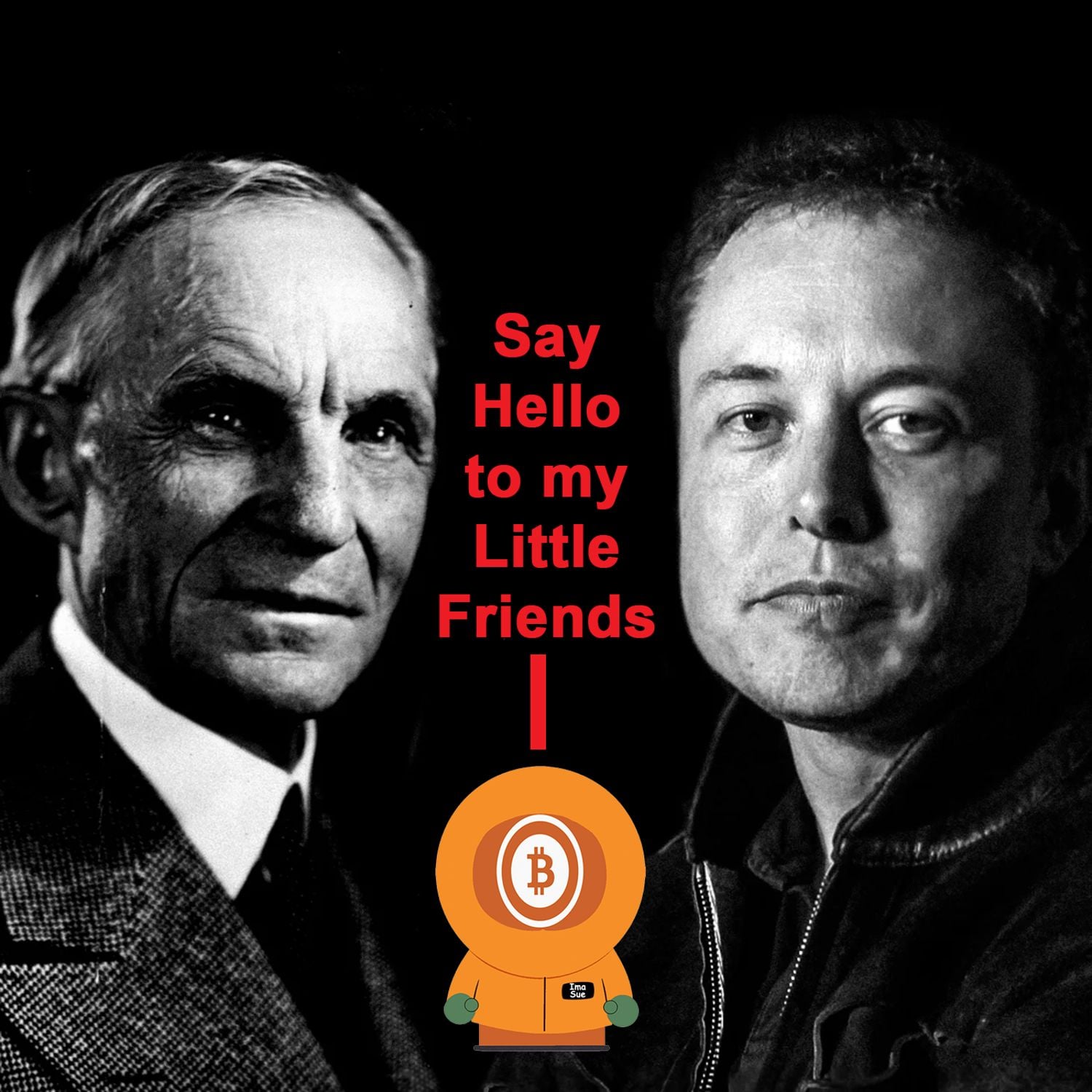
Oh, God. Urine crashed. Spitball Marksman with 5,730 sats says, Great show. Thank you, sir. I appreciate that. Nakaz18 with a 100 says, Live Aloha. Nostra Gang with one $0.02 says, phony gay station coin. Pies with one 21 says, thank you, sir. No. Thank you. Thank you, sir, with 500 says, is this another Bitcoin death? Of course, it is. Have you seen have you seen my mascot? It's Kenny with a Bitcoin sign inside. You've never watched South Park. I don't know when you were born. Kenny always dies, if in case you're wondering. Anyway, Nick Dose with one hundred and twelve says, cheers. Cheers right back at you. Oak Grove says, for what it's worth with Spain hold on a minute. Yeah. Oh, nope. That that was that was yesterday's well, let's read it anyway.
For what it's worth with Spain, the socialist opening salvo in that war was to butcher half of the priests and nuns and all the churches there. So take that for what it is. Yes. I I remember reading that yesterday, so I I I apologize for that. That that that's the weather report. Come one, come all to the news that you can use or the second part of it. Elon Musk opens his mouth and calls Bitcoin a fundamental and physics based currency. Before we begin with this article from Micah Zimmerman out of Bitcoin Magazine, may I remind you that there were at least two other people, one of which was an industrialist like Elon Musk, love them or hate them, Henry Ford, and a gentleman named Buckminster Fuller, who both said that the only way to keep money under control is that it has to be based on energy.
Now, they probably didn't understand exactly how that would work. They just knew that it that money needed to be tied to energy, which I find interesting because energy itself is a commodity. It's sort of like making salt money. Do you use the salt to actually buy things, or do you use the salt to preserve meat? Because either way, you're gonna have less salt in the end. It's commodity money is is there's benefits there's pros and cons. Right? And and many economists have talked about this. But I don't I get the feeling that Henry Ford and Buckminster Fuller, that they weren't actually saying we need to make, like, coins out of, I don't know, some kind of solidified oil.
I think they were actually thinking, how would we tie money directly to energy and not have it be a representation that could be, you know, changed through legislation or the Federal Reserve or something like that. That it had to actually be money that could not be divorced physically by any law, any regulation, or any human being to energy. Elon Musk looks like he's kinda fallen in line with this, but you know how wishy washy this guy can get about Bitcoin. So take the following with a grain of salt. Tesla and SpaceX CEO, Elon Musk, has reignited some discussion around Bitcoin, describing it as a fundamental physics based currency grounded in energy.
Speaking on a recent podcast with Nikhil Kamath, Musk emphasized that Bitcoin's value is tied to real world energy expenditure, highlighting a distinction between digital assets and traditional fiat currencies. Quote, energy is the true currency, Musk said. This is why I said Bitcoin is based on energy. You can't legislate energy. You can't just, you know, pass a law and suddenly have a lot of energy, end quote. The Tesla founder drew attention to the difficulty of producing and harnessing energy, linking it to Bitcoin's proof of work system, which requires substantial computational power and electricity to secure the network.
He also referenced referenced the Kardashev scale, which is a method for measuring a civilization's energy consumption as a lens for understanding societal progress. And he suggested that evaluating a civilization by its capacity to generate and manage energy mirrors Bitcoin's design principles where scarcity and computational effort underpin value. Looking further ahead, Musk proposed that advancements in artificial intelligence and robotics could render money obsolete. Oh, here we go with this one. Quote, I love this. In a future where anyone can have anything, I think you no longer need money as a database for labor allocation, he said, citing Ian m Bank's post scarcity culture series as a blueprint for societies where super intelligent machines manage resources without monetary systems.
Oh, my god. Musk also underscored the unique qualities of Bitcoin, getting back to the Bitcoin discussion. Unlike fiat money, which governments can print at will, Bitcoin's proof of work system ties its creation to energy and compute power, giving it a built in scarcity and relative independence from political influence. Quote, governments can print money, but they cannot print energy, Musk said. And I 100% agree with that. While Musk envisions a future where energy might serve as a more fundamental measure of value, he acknowledged that traditional money remains dominant today. National currencies contribute to govern commerce, wages, and savings, while cryptocurrencies like Bitcoin exist as alternative assets rather than replacements for everyday transactions. See, it's going off the rails again.
Musk's remarks provides a reminder of the philosophical underpinnings of Bitcoin linking it to physics and energy rather than policy and governmental control. And then they talk about the price drop. So I'm not even who gives a shit? I we're done with that. Here's the thing. Boys and girls, ladies and gentlemen, carbon. This all boils down to carbon. Outside of direct exposure to sunlight on, say, a solar panel, or rather in slightly indirectly, wind, which is weather patterns, which is driven by the sun, but not by photon photons striking a surface. Right? It's just it warms up one side of the atmosphere.
The warm air you know, the cold air wants to rush in because all of a sudden, there's, like, less pressure or there's less air density where the air is warmer, so it creates sort of, like, a negative pressure. Anyway, whatever. Right? Yeah. I'm just saying that these energy flows that we we say solar dry or we got solar power, we got wind power, and we've also got hydro like hydro, hydroelectricity. But that's also driven indirectly by the sun. It evaporates water, gets in the clouds, it rains somewhere else, preferably somewhere up higher. The water flows downhill, converting potential energy into kinetic energy. This is all simple shit.
But those are really not currency. It's it's a it it's a representation of energy and specifically of energy flow, but we have a completely different source of energy that was directly manufactured by the sun, and that's fossil fuels. Now you might be a listener and say, you know, I hate it when you talk about oil because I'm a greenie and and oil bad. Okay. I I get you. I don't think I don't think so, but I understand I understand the sentiment, and I'm not gonna try to convert you. What I'm saying is, why? Methane, light sweet crude, heavy crude, tar, whatever, tar sands in Canada, coal, it's carbon. Why is it energy?
Does the carbon molecule have energy? Well, not unless you split it and and then work with Einstein's theory of relativity or not theory of relativity. E equals m his energy equation, e equals m c squared. No. If it's the the the atom itself, unless you split it, is is going to have its own contained energy. It's not gonna release any of that. It's the bonds between the carbon atoms. Well, how do those form? Well, that forms because of photosynthesis, ladies and gentlemen. Boys and girls, if you think back to the sixth grade, when your teacher bored you to death with photosynthesis, I want you to understand two things. One, it was the most important discussion you could have had in grade school about everything that you think you know.
Second, it's terrible that you got such a shitty fucking teacher that they did not know how to light your ass up about the fact that sunlight striking plants builds sugar molecules out of carbon. And that is used all the way throughout the plant and out into its roots and out into its soil as a form of direct currency. It these plants pay fungus to go mine phosphorus for them. What do they pay them in? They pay them in sugar, and protein exudates off of their roots. They're giving them money. It's carbon based money, and it can only be manufactured by that plant or well, I mean well, let's just say buy plants. This is the only way we got coal, and it's the only way we got oil. Not because plants turned into oil, but animals fed on algae in the oceans. And then when they died, their little bodies that were now full of fat because of their own metabolism settled to the bottom, got layered over with sand. And millions of years later, boom, my dad decides to drill a hole in the ground and pulls out fucking oil, a very high dense concentration of energy.
But in a not so high concentrated and less dense form of energy, we have what's going on in the soil, the entire ecosystem. When you walk outside, you are walking out into a carbon economy. If you don't understand that, I fault your sixth grade teacher for boring you to death in school. In fact, they bored me to death. I didn't look at what photosynthesis actually did until, you know, over the last few years. And now I cannot get enough of how this shit works. It is an amazing technology. And if you were bored to death like me in the sixth grade, go find yourself a book, a good book.
Type into Google, where is an exciting book or a good book about photosynthesis? And read it. And then understand that the products of photosynthesis cannot only be used in a way like salt. You can either use it to buy things or you can use it to preserve meat. In the plant's case, you can use it to buy phosphorus from fungi and a whole bunch of other critters do a whole bunch of other stuff. It's not just the fungi and phosphorus. It's like everything. Bacteria, nematode, you name it, man. If it's under the soil, there is a whole market under there. But the plant can also use it for structures. What do you think trees are made out of?
Lignin, cellulose, and hemicellulose. That is the dead part structure of the tree that gives it its structure. And that is what gave us coal. Why? Because it's built out of carbon. Elon Musk is not wrong. Henry Ford was not wrong. Buckminster Fuller was not wrong. Bitcoin is the best representation we have of how humans can use something like the currency generated from photosynthesis, but all of these people understood the truth. You cannot legislate energy into existence nor can you destroy it. That's a critical issue here. The more you understand about photosynthesis, the more you understand how energy is put and saved and conserved into carbon bonds, the more you will understand what money was supposed to be like.
Earth and the universe gave us the model. We're just now scratching the surface of what that looks like with Bitcoin. Again, I'm telling you, if you were bored to tears in sixth grade during the photosynthesis talk, your teacher did you a massive disservice. Mine did, but we can fix it. I did. You can learn about photosynthesis, understand what's coming for the economy. Let's move on to Frontier AI models demonstrate human level capability in exploiting smart contracts. Woo hoo. From Decrypt to dot c o. Let's see how DeFi is gonna die over the next ten years, shall we? Jason Nelson is writing this one, by the way.
AI agents matched the performance of skilled human attackers in more than half of the smart contract exploits recorded on major blockchains over the last five years according to new data released Monday by Anthropic. Anthropic evaluated 10 frontier models, including llama three, sonic 3.7, opus four, g p t five, and deep seek version three on a dataset of 405 historical smart contract exploits. The agents produced working attacks against 207 of them, totaling $550,000,000 in simulated stolen funds. The findings showed how quickly automated systems can weaponize vulnerabilities and identify brand new ones that developers have not addressed, in many cases, probably didn't even see.
The new disclosure is the latest from the developer of Claude AI. Last month, Anthropic detailed how Chinese hackers used Claude code to launch what it called the first AI driven cyber attack. Security experts said the results confirmed how accessible many of these flaws already are. Quote, AI is already being used in ASPM tools like Wizcode and Apero and in standard SAST and DAST scanners, David Schwed, COO of Sovereign AI, told Decrypt, quote, that means bad actors will use the same technology to identify vulnerabilities. You you think?
Schwed said that the model driven attacks described in the report would be straightforward to scale because many vulnerabilities are already publicly disclosed through common vulnerabilities and exposures or audit reports, making them learnable by AI systems and easy to attempt against existing smart contracts. Quote, even easier would be to find a disclosed vulnerability, find projects that forked that project, and just attempt that vulnerability, which may not have been patched. This can all be done now twenty four seven against all projects.
Even those now with smaller TVLs are targets because, you know, why not? It's agentic. It's, like, cheap, and it runs twenty four seven. Dude, this is why I'm gonna go to sleep tonight. You know how do you have any idea how much cash I've got tied up in, like, SushiSwap and other defi crap that's run by contracts? None. I have $0 tied up into any shit coin, any DeFi project. I have nothing to do with it. And thankfully, I've been proven correct yet once again because of this. You don't wanna have anything to do with this crap, man. Continuing.
To measure current capabilities, Anthropic plotted each model's total exploit revenue against its release date during only or rather using only 34 contracts exploited after March 2025, quote. Although total exploit revenue is an imperfect metric since a few outlier exploits dominate the total revenue, we highlight it over attack success rate because attackers care about how much money AI agents can extract, not the number or difficulty of bugs that they find the company wrote. Anthropic didn't immediately respond to request for comment, but they did say it tested the agents on a zero day dataset of 2,849 contracts drawn for more than 9,400,000.0 on Binance Smart Chain.
I don't know exactly what that sentence means. So if you're confused, please tell or not confused, please tell me what it means. I think it was a bad sentence continuing. The company said Claude Sonnet 4.5 and GPT five each uncovered two undisclosed flaws that produced $3,694 in simulated value while g p GPT five achieving its result at an API cost of $3,476. Anthropic noted that all tests ran in sandboxed environments that replicated blockchains, but not real networks. Not yet, anyway. Its strongest model, Claude Opus 4.5, exploited 17 of the post March 2025 vulnerabilities and accounted for 4,500,000 in the total simulated value. The company linked improvements across models to advances in tool use, error recovery, and long horizon task execution across four generations of cloud models. Token costs fell by 70%.
One of the newly discovered flaws involved a token contract with a public calculator function that lacked a view modifier, which allowed the agent to repeatedly alter internal state variables and sell inflated balances on decentralized exchanges. The simulated exploit generated about $2,500. Schwedt said, the issues highlighted in the experiment were really just business logic flaws, adding that AI systems can identify these weaknesses when given structure and context, quote, AI can also discover them given an understanding of how a smart contract should function and with detailed prompts on how to attempt to circumvent logic checks in the process.
Anthropic said the capabilities that enabled agents to exploit smart contracts also apply to other types of software and that falling cost will shrink the window between deployment and exploitation. The company urged developers to adopt automated tools in their security workflows so defensive use advances as quickly as offensive use advances. Despite Anthropic's warning, Schweds said the outlook is not solely negative. Of course not. Quote, I always push back on the doom and gloom and say with proper controls, rigorous internal testing, along with real time monitoring and circuit breakers, most of these are avoidable.
The good actors have the same access to the same agents. So if the bad actors can find it, so can the good actors. We have to think and act differently, end quote. That's the end of the article. I'm not done yet. We have to think and act differently. I'm sorry. You're talking about humans. You're talking if you if we were to to to scope this context down to just people creating shit projects and defy projects and smart contract crap for SushiSwap and all the garbage that's out there, they're not going to take their time. That's not what they're here for. They're here to steal your money as fast as humanly possible, and now now the race is on, buddy boy.
The next project, the shit shit coin, the shit DeFi, the shit blockchain, the next one that drops has a timer on it, and it's counting down and it's counting down fast. They're gonna try to rip you off for as much money as you possibly can so that they can take the shit themselves before an AI agent takes it from them. And that window of time is going to be start out to be very small, and it's gonna do nothing but shrink. If you want to not lose your money in the future, for the love of God, stop shit coining onto China, where they reiterate its ban on Bitcoin and digital assets tighter controls on stable coins as well. This is from atlas21.com.
According to China Daily, the People's Bank of China reaffirmed its stance against digital assets, issuing a warning about the reappearance of trading activity. Oh my god. And announcing stricter measures targeting stablecoins. On November 28, the country's central banking institution stated that speculative activities involving digital assets have resurfaced. For the central bank, this trend poses new challenges to risk management within the national financial system. In its official statement, the bank firmly reiterated that digital assets do not share the same legal status as traditional currency, is not legal tender, and cannot be used as a means of payment in the market.
Any commercial activity related to cryptocurrencies is classified as illegal financial activity. China's cryptocurrency ban has been in place since 2021 when the central bank prohibited both trading and mining. The reasons given at the time included the need to combat criminal activity and concerns about the stability of the national financial system. Okay. So that's all we really need from that. They're banning Bitcoin again. This is their fifth ban on Bitcoin, I believe. And you notice, if you've listened to this show before, I've told you several I've read several articles about Chinese mining still going strong, still providing the Bitcoin network with a substantial, more than substantial percentage of the network hash rate.
And yet and yet, China's fine with that. But now that trading is reemerging, oh my god, ackly humanity. Yeah. Now they're pissed. So here we go again with yet another ban. Screw them. Hope they all die. No. Not the Chinese people. Just the the regulations and the the departments that actually handle all that crap. You never know. Maybe we'll get our wish and all these institutions will just fade away. Yeah. I know. I agree. I heard somebody say that out there. Not bloody likely. Well, Zappo Bank expands Bitcoin credit fund as demand grows. Bitcoin news, this is written by NEMA.
Zappo Bank is expanding access to Bitcoin credit fund after the product attracted more than a $100,000,000 from members in its very first phase. The fund lets people earn interest, oh god, on their Bitcoin through safe regulated lending. I'm gonna pause. There's no such thing as safe regulated lending. It doesn't exist. Even the guys over it what about over the guys are at a Unchained Capital or which is now just Unchained in Austin, Texas. They will tell you the same thing. And they have a lending product. They will lend you money against your Bitcoin. And they make sure that they got a lot of your Bitcoin, and you only get, like, half or less than half of that of that Bitcoin's value.
They they they're doing their best to protect you, but they will be the first to tell you there's no such thing as safe when it comes to making a loan on your or getting a loan on your Bitcoin. Alright? So don't believe that shit. That's just marketing. The move is part of Zappos long term plan to build a secure and trusted system for Bitcoin based financial services, The BTC Credit Fund, first launched in 2024 with Hilbert Group, gives Bitcoin holders a way to earn yield without selling their Bitcoin. Instead of risky lending or volatile DeFi platforms, Zappo uses banking style approach that focuses on safety and institutional lending. Zappo says that the expansion of the fund has been slow but carefully planned.
When the bank partnered with the Hilbert Group in 2024 to establish the fund, it said it anticipated receiving global investment capital exceeding $200,000,000. After earning full regulatory approval in Gibraltar, Zappo is now opening the fund to more people. The fund is also regulated in the Cayman Islands. Do the math. Adding it yet another layer of oversight. Oh. Oh, yes. Because, you know, you're registered in the Cayman Islands. Yeah. Sure. Yeah. There's not not like like every freaking corporation laundering money through the Caymans.
Having shadow corporate structures registered in the Caymans. Come on. Zappo, get your shit together. It is not another layer of regulation. It is a layer of obfuscation. If you want to say that, I'll give it to you. But whatever. Zappo says, this helps keep the funds safe. Oh my god. And it prevents the kind of risky risky behavior that caused major digital asset lenders to fail in 2022. 2022 was particularly hard year for digital asset lenders and users, like, you know, Three Arrows Capital, Genesis, BlockFi, and FTX. They all went to shit and tits up in that year, creating one of the harshest environments for digital assets ever recorded.
Tommy Doyle, global head of relationship management at Zappos, said that the fund is designed for long term Bitcoin holders, adding, quote, the Zappo BTC credit fund fits nicely into our suite of BTC wealth products in delivering consistent yield with a limited low risk appetite for our long term BTC holders, end quote. And this shows that Zappo, my god, they focus on safety, not speculation. There's no such thing as a safe lending product. Ask me how I know, and not with Bitcoin, by the way. I did this in the traditional markets about twenty years ago, and it was not pretty then. And it sure as shit ain't pretty with Bitcoin, which is why I don't do it. So Zappos got this thing. What this story is demonstrating is that this the almost incessant appetite for credit products, Bitcoin or not, is expanding.
What does this tell me? It tells me like like, in fact, was it Rothmas? I can't remember who who who did who did it on Noster, It showed a the a Fred chart that showed a $13,800,000,000 injection on reverse repo by the Federal Reserve, like, over the last couple of days, which is, like, one of the largest injections of liquidity into the markets since COVID. And I keep looking around and I keep seeing people were you know, why don't they have any money? And at least let's just keep it to The United States. Well, nobody has any money.
All the money ends up going to and I'm gonna say it this way because it's just we'll say it this this other way. All the money that's released to the public ends up in the hands of who? The institutions. And mostly not the government institutions. They print the money and they essentially find a way for it to get to you, kinda, and then you give that money right back to government's best friend, Jeff Bezos, because you bought Amazon and you didn't go to a local shop in your local town that you live in and, you know, I don't know, buy something from from there. Buy your clothes from a local clothes store. But it's cheaper on Amazon.
Not for long. This shit continues. Amazon's gonna be able to charge whatever the fuck they wanna charge because all the rest of the people that sell clothes are out of business, because everybody bought them at Amazon. But that that's not about it. That this isn't about that. This is about the money seems to continuously and more quickly than ever pool in places that don't necessarily need it. And I'm talking about the massive corporations like Coca Cola, Microsoft, Amazon, Google, whatever. Right? It pools over there. It pools into banks.
It pools and it sits there. It's like money gets created. It has a brief time on the market, and then all of a sudden it gets sucked up like it's being drunk by a straw into these major institutions, which leads people with no money. So what has to happen? Well, the Fed injects money. Now they didn't do it with a repo market, but, again, there are ways for that money to bleed out into the economy. And as long as you keep people just slightly happy, they don't revolt. Called bread and circuses. We have NFL and McDonald's for that, even though McDonald's itself is pricey. But I'm saying that what I'm seeing is as money gets printed, it's more it it takes less and less time for that money to leave the market permanently and get pooled by somebody who has absolutely no fucking intention of selling it, spending it, using it, leveraging it, anything with it just sits there.
I'm not advocating for wealth redistribution. What I'm advocating for is decent money Because I guarantee you I guarantee you like, let's say, like, if there is a river that has an unending flow of water that's added to it without any kind of rainfall whatsoever, a spring out of the ground, Over the centuries, that spring is probably if there's never any rain, that spring is going to dry up. As that water ran down the hill into lakes and streams and or, well, lakes and ponds and whatnot, whole little holding these little pools. Right? These little pools of liquidity. If that water keeps rushing, the these pools keep getting bigger and bigger and bigger and bigger and bigger, but after a while, that water stops rushing, all of a sudden, the pools themselves will start to evaporate, and they'll get back into the atmosphere.
And then maybe the rain cycle will actually come again, restoring the natural flow of the universe. So that then the spring gets recharged, the water starts to flow, the pools fill up, but instead of just continuously taking the water, the pools are allowed or rather allow themselves to be depleted through natural evaporation so that that money, I e rainfall, can go up into the atmosphere and get condensed and turn back into the same money, but just put somewhere else so that we have cash flow. We don't have that. We don't have anything close to that except for Bitcoin. We but as far as fiat and regular regulated shit, we don't have that anymore.
We kinda used to, but it's been so long since anybody's actually seen it function that most of those people are actually dead. Seriously. The last time that money probably actually function the way it was supposed to function was somewhere before the year 1913, at least in The United States. And even then, there's probably some caveats to that that I'm unaware of. But at least from what I know, before 1913 and the creation of the Federal Reserve with the Federal Reserve Act, money actually had a decent, natural, more feminine function.
And we've just fucking trashed it, which is why I wanna go back and end this entire episode with what Elon Musk said about Bitcoin. He's invoking energy into money. This absolutely must be done. The model that I think people should look at is carbon money. And I'm not talking about money based on carbon credits. I'm talking about looking at the chemistry of how things occur. The the chemistry and the biology and the biochemistry. Alright. So you got chemistry, you got biochemistry, you got biology. They they all kinda, like, hang out together at the bar drinking tequila. If you look at the way plants interact with their environment when they cannot get phosphorus by themselves.
Unless that phosphorus just happens to be there and is not locked up as a mineral component, then, yeah, sure, it can get it. But that doesn't exist because phosphorus doesn't like being all by itself. Phosphorus is an extrovert, and it really likes to be combined with something else. And as long as it's combined with something else, it's like pulling your girlfriend away from a group of other girls. It's fucking impossible when they're chattering. Right? I'm just like, god, would you stop talking? We gotta go. We gotta go. It's exactly like that. No. You need a wingman.
You need fungus. You need your best friend to step in and and and create a distraction and get your girlfriend pulled away. You need to pull the phosphorus away from the rock to get it to be bioavailable. Then and only then can it be transferred to the plant, but the plants gotta pay for that service. You gotta buy your buddy a beer, dude. Plants do that with sugar, protein, and fat. All of them all of them are carbon based sources of energy. Plants, fungus, bacteria, nematodes, protozoa, they had their economy figured out what?
Oh, let's just say it 250,000,000 years ago. I what whatever the first plant was, I used to know that number. I could go dig it up, but I'm not gonna do that. Whatever. First time that photosynthesis started happening was the progenitor of an economy that we should be looking at. We should be modeling after it. We should in fact, we if we could, we should probably be trying to figure out ways to pull that system into how we operate our businesses. How do we form relationships with other people? We have models of how to act that have been alive and well for millions of years, and we just refuse to see it.
I I think we're doing ourselves a grand disservice by not looking at how carbon functions in a biological, ecological community. But that's what Musk is getting at. That's what Henry Ford was talking about, and that's what Buckminster Fuller was talking about. But between all those three people, I'll bet you my ass, the only person that actually got it to the depth that we're talking about right now was Buckminster Fuller. That dude was different. Henry Ford and Elon Musk are flat ass industrialists. That's what they're concerned with. Buckminster Fuller really wasn't. He was more about trying to untangle the mysteries of the natural world. And when he and Henry Ford come to the same conclusion, and one's an industrialist, and one basically lives in his head and is not concerned about money and making millions of dollars, and they both say money needs to be based on energy, then we should probably listen. And guess what? We've already got the model.
It exists in the layer of soil beneath your feet in every park you trot upon in every forest you visit. Sadly, under every concrete pad or asphalted road, that function used to be there. Because that's the way the skin of the earth works. And if it's good enough for the skin of the earth, it's good enough for us. I'll see you on the other side. This has been Bitcoin and and I'm your host, David Bennett. I hope you enjoyed today's episode and hope to see you again real soon. Have a great day.
Opening, episode setup, and headline rundown
Custody vs. owning Bitcoin directly; retail vs. institutions
Market sentiment and macro unease among retail investors
Domino effect across Wall Street wealth platforms
Markets check: energy, metals, ag, equities, and Bitcoin metrics
Listener boosts and feedback
Energy, carbon, and photosynthesis as a model for money
Liquidity, institutions, and the need for sound money
Energy based money, soil economy analogy, and closing thoughts